

Hydraulic Oil Selection Guide for Southeast Asia: ISO VG Viscosity Chart & Temperature Range

Finding the right hydraulic oil for tropical climates in Indonesia, Thailand, Vietnam, Malaysia, and the Philippines is not the same as selecting lubricants for temperate regions. With ambient temperatures regularly exceeding 35°C and humidity levels above 80%, equipment operators face unique challenges that standard selection guides often overlook.
This guide provides specific recommendations based on ISO VG viscosity grades, operating temperatures, and real-world experience in Southeast Asian industrial environments.
1. Understanding ISO VG Viscosity Grades
The ISO VG (Viscosity Grade) system is the international standard for classifying hydraulic oil viscosity. The number represents the oil’s kinematic viscosity in centistokes (cSt) at 40°C.
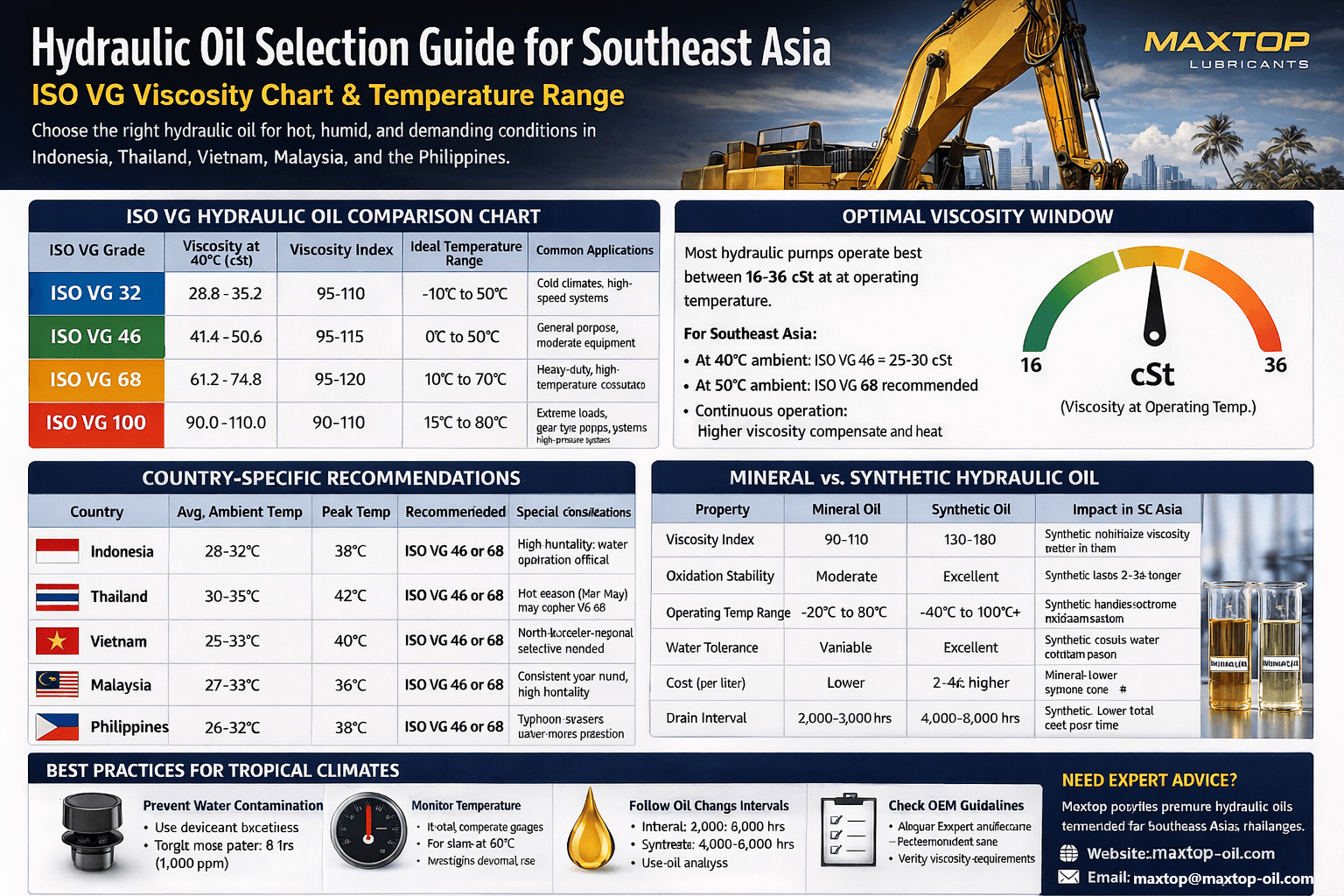
ISO VG Hydraulic Oil Comparison Chart
| ISO VG Grade | Viscosity @40°C (cSt) | Viscosity Index | Temperature Range | Typical Application |
|---|---|---|---|---|
| ISO VG 32 | 28.8 – 35.2 | 95–110 | -10°C to 50°C | Cold climates, high-speed systems |
| ISO VG 46 | 41.4 – 50.6 | 95–115 | 0°C to 60°C | General-purpose equipment |
| ISO VG 68 | 61.2 – 74.8 | 95–120 | 10°C to 70°C | Heavy-duty industrial systems |
| ISO VG 100 | 90.0 – 110.0 | 90–110 | 15°C to 80°C | High-pressure systems |
Why Viscosity Index Matters
| VI Range | Description | Recommendation |
|---|---|---|
| < 90 | Large viscosity change | Not suitable for tropical climates |
| 90–110 | Moderate stability | Acceptable for standard use |
| 110–150 | High stability | Recommended for Southeast Asia |
| 150+ | Very stable | Best for extreme conditions |
2. Hydraulic Oil Selection for Southeast Asia
Southeast Asia features high temperatures (28–40°C) and humidity (70–90%), which significantly affect oil performance.
Recommended ISO VG by Country
| Country | Avg Temp (°C) | Peak Temp (°C) | Recommended ISO VG | Notes |
|---|---|---|---|---|
| Indonesia | 28–32 | 38 | 46 / 68 | High humidity |
| Thailand | 30–35 | 42 | 46 / 68 | Hot season impact |
| Vietnam | 25–33 | 40 | 46 / 68 | Regional variation |
| Malaysia | 27–33 | 36 | 46 / 68 | Stable climate |
| Philippines | 26–32 | 38 | 46 / 68 | High moisture risk |
Optimal Viscosity Window
Most hydraulic systems perform best within:
16–36 cSt at operating temperature
| Condition | Recommended Choice |
|---|---|
| Normal operation | ISO VG 46 |
| High temperature / heavy load | ISO VG 68 |
| Long continuous operation | Higher viscosity preferred |
3. Common Selection Mistakes
| Mistake | Impact |
|---|---|
| Using ISO VG 32 | Oil too thin at high temperature |
| Ignoring VI | Unstable performance |
| Ignoring water contamination | Corrosion and oil degradation |
Using oil that is too thin can lead to:
- Increased wear
- Internal leakage
- Reduced efficiency
4. Mineral vs Synthetic Hydraulic Oil
| Property | Mineral Oil | Synthetic Oil | Impact |
|---|---|---|---|
| Viscosity Index | 90–110 | 130–180 | Better stability in heat |
| Oxidation Stability | Moderate | Excellent | Longer oil life |
| Operating Range | -20°C to 80°C | -40°C to 100°C+ | Better for extreme temps |
| Water Resistance | Medium | High | Better in humid climates |
| Drain Interval | 2,000–3,000 hrs | 4,000–8,000 hrs | Lower total cost |
5. Selection Checklist
| Step | Action |
|---|---|
| 1 | Determine operating temperature |
| 2 | Select ISO VG (start with 46) |
| 3 | Ensure VI ≥ 100 |
| 4 | Evaluate water resistance |
| 5 | Confirm OEM specs |
| 6 | Consider synthetic oil |
6. Maintenance Tips for Tropical Climates
Oil Change Interval
| Oil Type | Tropical Condition | With Oil Analysis |
|---|---|---|
| Mineral | 2,000–3,000 hrs | Up to 4,000 hrs |
| Synthetic Blend | 4,000–5,000 hrs | Up to 6,000 hrs |
| Full Synthetic | 6,000–8,000 hrs | Up to 10,000 hrs |
Key Maintenance Actions
| Item | Recommendation |
|---|---|
| Moisture control | Install desiccant breathers |
| Temperature | Keep below 60°C |
| Water content | < 0.1% (1000 ppm) |
| Monitoring | Regular oil analysis |
FAQ
Q: What ISO VG grade is best for Southeast Asia?
A: ISO VG 46 or ISO VG 68 is recommended depending on operating conditions.
Q: What is the difference between ISO VG 32, 46, and 68?
A: The number indicates viscosity at 40°C. Higher numbers mean thicker oil and better high-temperature protection.
Q: Can I mix hydraulic oils?
A: No, mixing oils is not recommended.
Q: How often should oil be changed?
A: Typically every 2,000–3,000 hours in tropical climates.
The Maxtop Difference
| Feature | Benefit |
|---|---|
| High VI (110–150) | Stable viscosity |
| Oxidation resistance | Longer oil life |
| Water separation | Protects system |
| Anti-wear additives | Reduces equipment wear |
Get Expert Hydraulic Oil Selection Support
Choosing the right hydraulic oil depends on your equipment, operating conditions, and maintenance strategy.
Contact Maxtop for:
- Free consultation
- Equipment-specific recommendations
- Oil analysis support
- Bulk pricing


