

Gear Oil Selection Guide for Southeast Asia:How to Choose the Right ISO VG Grade for Heavy-Duty Applications

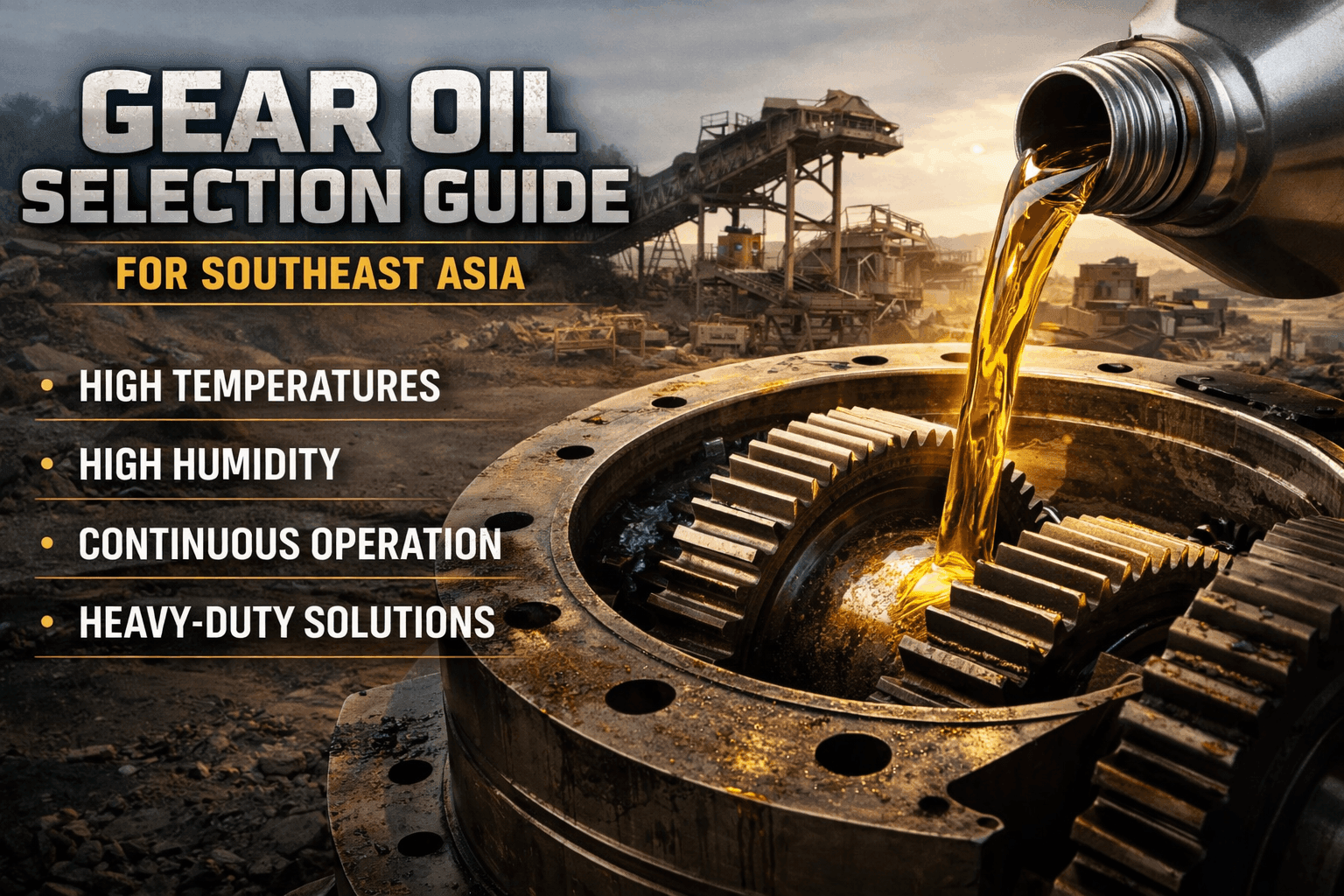
Choosing the right gear oil in Southeast Asia is not just about matching a viscosity grade.
In real industrial environments across Indonesia, Vietnam, Malaysia, and the Philippines, we often see the same issues:
- Gearboxes running hotter than expected
- Oil degrading too quickly
- Unexpected shutdowns affecting production
In many cases, the root cause is simple:
👉 The oil was selected based on European or standard conditions — not tropical reality.
Why Gear Oil Selection Is Different in Southeast Asia
Industrial equipment in Southeast Asia operates under much harsher conditions:
- Ambient temperatures reaching 35–40°C
- Humidity levels consistently above 70–90%
- Equipment running 20–24 hours per day
Under these conditions:
- Oil viscosity drops faster
- Lubrication film becomes unstable
- Water contamination is more likely
👉 This is why a gearbox designed for ISO VG 220 often requires ISO VG 320 or 460 in real operation.
Real Case: Preventing Gearbox Failure in Indonesia
One of our clients in a nickel mining operation faced repeated gearbox failures in their conveyor systems.
Original setup:
- Oil used: ISO VG 220 mineral gear oil
- Operating temperature: 75–80°C
- Oil condition: Oxidation + water contamination
Problem:
Gear wear and shutdowns every 2–3 months, causing production losses.
What we recommended:
- Upgrade to ISO VG 460 gear oil
- Use high viscosity index formulation
- Improve water separation performance
Results:
- Gearbox temperature reduced by 8–12°C
- No failures for over 12 months
- Oil change interval significantly extended
👉 Estimated annual savings: over USD 80,000
ISO VG Selection Guide (Practical Use)
Instead of relying only on OEM manuals, use this real-world approach:
| Operating Condition | Recommended ISO VG |
|---|---|
| Standard factory environment | ISO VG 220 |
| High temperature (>60°C oil temp) | ISO VG 320 |
| Heavy load + high temperature | ISO VG 460 |
| Mining / extreme duty | ISO VG 460–680 |
👉 Practical rule:
In Southeast Asia, select 1 grade higher than OEM recommendation
Common Mistakes to Avoid
1. Using Standard (European) Specifications
Most OEM specs are based on 20–25°C ambient conditions.
👉 In tropical climates, these specs are often not sufficient.
2. Ignoring Water Contamination
High humidity leads to water entering gearboxes through:
- Breathing systems
- Condensation
- External exposure
Even small amounts of water can cause:
- Rust
- Additive depletion
- Foam formation
3. Choosing Oil Based on Price Only
Lower-cost oils often:
- Break down faster
- Require more frequent changes
- Increase long-term maintenance costs
Why Industrial Clients Choose Maxtop Gear Oil
At Maxtop, we focus on real operating conditions — not just lab specifications.
Our gear oils are formulated for tropical environments:
- ✔ High Viscosity Index — stable under high temperatures
- ✔ Strong EP additives — protection under heavy load
- ✔ Excellent demulsibility — handles water contamination
- ✔ Longer service life — reduced downtime
We are currently supporting clients across:
- Indonesia (mining & palm oil)
- Vietnam (manufacturing)
- Malaysia (processing industries)
When Should You Upgrade Your Gear Oil?
You may need to change your oil if you notice:
- Gearbox temperature increasing
- Oil turning dark or milky
- Increased noise or vibration
- Frequent oil replacement
👉 These are early signs of lubrication failure.
Get Expert Recommendation (Free Support)
Choosing the right gear oil doesn’t have to be complicated.
We can help you select the correct product based on your actual conditions.
Simply send us:
- Equipment type
- Current oil grade
- Operating temperature
We will provide:
- ✅ Correct ISO VG recommendation
- ✅ Technical datasheet
- ✅ Quotation (FOB / CIF available)
Contact Us
📧 Email: maxtop@maxtop-oil.com
🌐 Website: www.maxtop-oil.com
Final Thoughts
In Southeast Asia, gear oil selection is not just about following specifications — it’s about adapting to real working conditions.
Choosing the right viscosity and formulation can:
- Extend equipment life
- Reduce maintenance costs
- Prevent unexpected downtime
👉 And in many cases, the difference is simply choosing the right ISO VG grade.


